
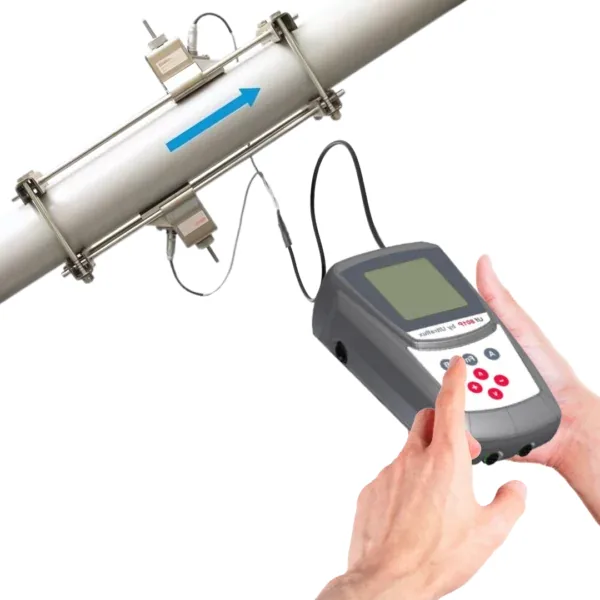
 Portable · BTU kit
Ultraflux UF801-P Portable Clamp-On Flow Meter
Optional energy kit adds supply and return temperature inputs. Flow and delta-T from one box, thermal energy calculated on board. The portable energy-audit instrument.
SpecificationsA BTU meter is a flow meter with two temperature sensors. Because the flow measurement is non-invasive, so is the energy measurement — which means you can meter a live chilled water riser in an occupied building without touching the water.
A BTU meter (or heat meter, or energy meter) does not measure a new quantity. It measures two familiar ones and multiplies them.
Qthermal = ṁ × cp × ΔT
Mass flow, times the specific heat of the fluid, times the temperature difference between supply and return. Get flow and get delta-T, and you have thermal energy — in BTU, kW, ton-hours, whatever unit the meter is asked for.
Which means a clamp-on BTU meter is a clamp-on flow meter with two temperature sensors bolted on. And because the flow measurement is non-invasive, so is the whole energy measurement. You can meter the thermal energy in a live chilled water riser without draining anything.
Retrofit energy metering is a category where clamp-on has essentially no competition. Consider what you are usually asked to do: work out how much cooling this building, or this floor, or this tenant is actually consuming — on a system that was built without metering and cannot be shut down.
An inline BTU meter means draining a riser in an occupied building. That is not a measurement project; that is a construction project with a measurement at the end of it. A clamp-on BTU meter is a technician with a strap and an afternoon.
Energy audits. The core use. Establish what a chiller plant is really delivering, what each loop is consuming, and where the energy is going.
Chiller performance verification. A chiller is billed and specified in tons. Tons are a thermal energy rate. If you cannot measure flow and delta-T, you cannot verify that the machine is delivering what the nameplate claims — and machines quietly stop delivering.
District energy and campus sub-metering. A central plant sells heating and cooling to buildings. Somebody has to meter what each building took. Permanent clamp-on BTU meters do this without cutting a single riser.
Tenant billing and cost allocation. Same problem, smaller scale.
Commissioning and hydronic balancing. Verify each branch is getting the flow and the delta-T it was designed for.
In a well-installed system the flow measurement is the more accurate half. Delta-T on a chilled water loop can be small — a handful of degrees — and the relative error in a small temperature difference is large. Two sensors each with a modest absolute error can produce a delta-T that is meaningfully wrong.
This is why matched-pair temperature sensors exist and why they are worth specifying. If your delta-T is small, the sensors are where your accuracy budget goes, not the flow meter.
Portable · BTU kitOptional energy kit adds supply and return temperature inputs. Flow and delta-T from one box, thermal energy calculated on board. The portable energy-audit instrument.
Specifications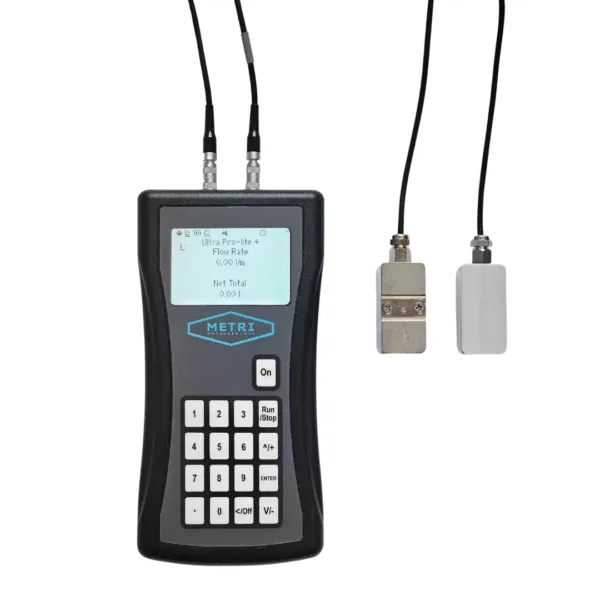 Portable · from $3,999
Heat quantity measurement when inlet and outlet temperatures are known. 230 g, DN10–DN2000. The value option for energy work.
Specifications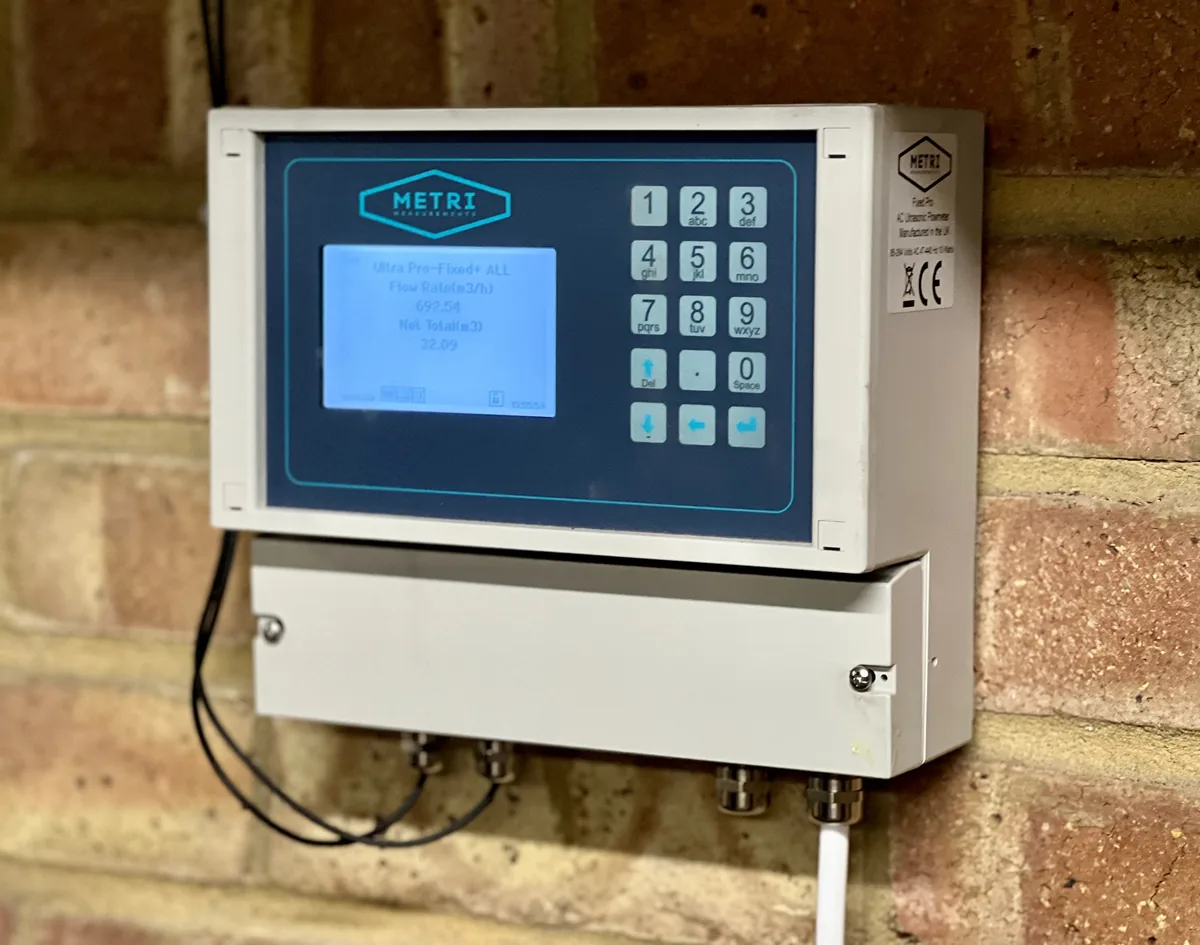 Fixed · heat flow
Permanent heat flow measurement with additional temperature sensors. 1:2500 turndown handles the seasonal swing on an HVAC loop. 16 MB datalogger.
SpecificationsRoving energy audits across many buildings → the UF801-P with the energy kit. It is built for exactly this, and the data logger produces the record the audit report needs.
Permanent sub-metering on a campus or district loop → the IC-UPF. The 1:2500 turndown is the specification that matters here, because a chilled water loop in a Houston August and the same loop in January are different orders of magnitude, and a narrow-turndown meter goes blind at the bottom without telling you.
Budget-constrained energy work → the Ultra ProLite at $3,999, with heat quantity measurement when inlet and outlet temperatures are known.
Tell us the loop — pipe size, fluid, and your typical delta-T. If your delta-T is small, the temperature sensors matter more than the flow meter, and we will tell you where to spend.
Request a quote